From Underutilized Space to Independent Luxury: Navigating Vancouver’s Rules, Structural Dig-Outs, and Design Excellence
Summary:For the discerning Vancouver homeowner, transforming a residence's lower level into a legal,...

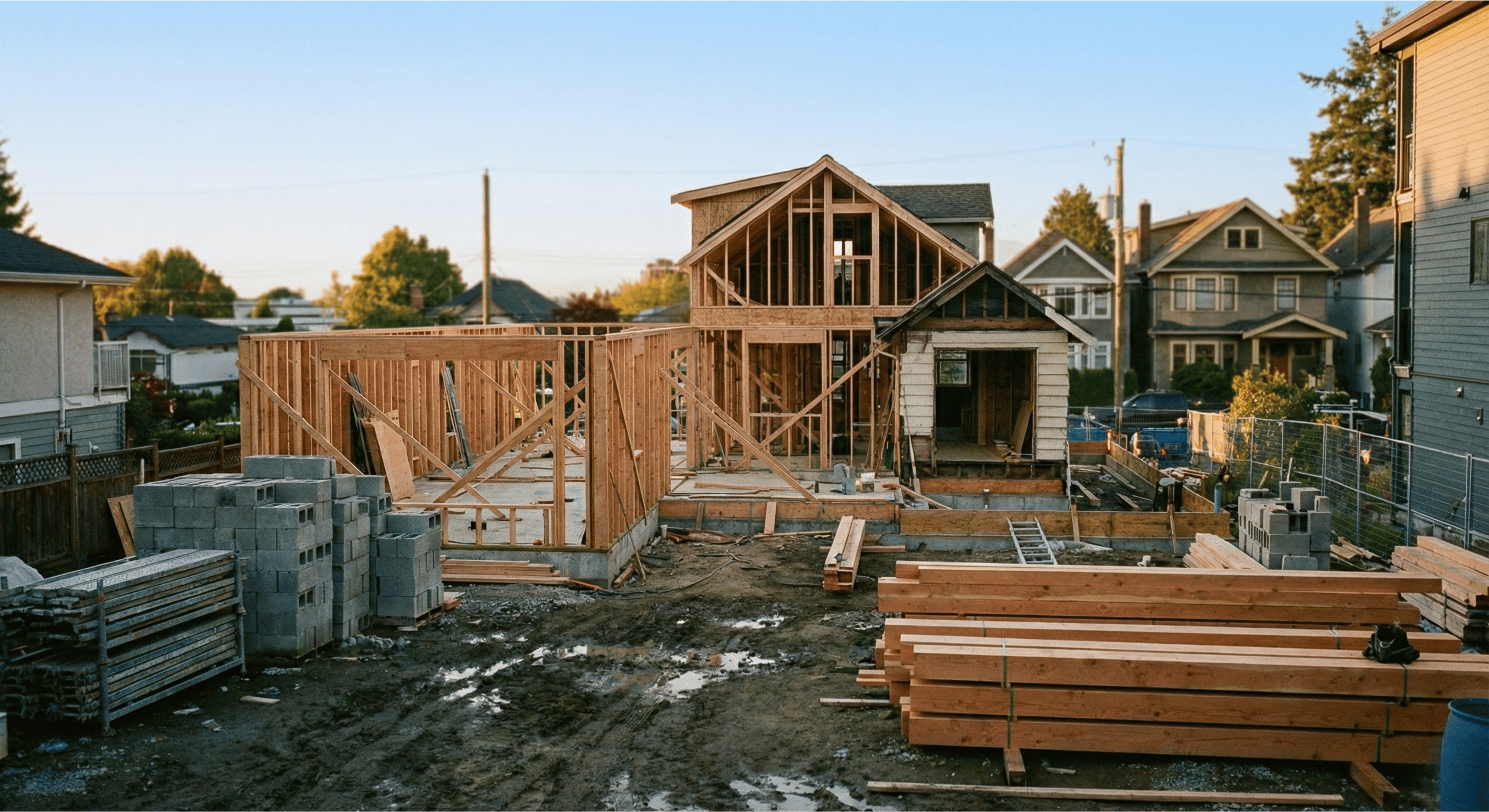
Summary: Building a home addition in Vancouver is the ultimate solution when you love your neighbourhood but have outgrown your space. It’s also one of the most complex renovation projects you can undertake. This guide breaks down the critical first step—understanding your FSR and zoning—and details the costs, which can range from $400 to over $800 per square foot. We'll walk through the process, the professionals involved, and what to expect when adding significant new value and space to your Vancouver home.

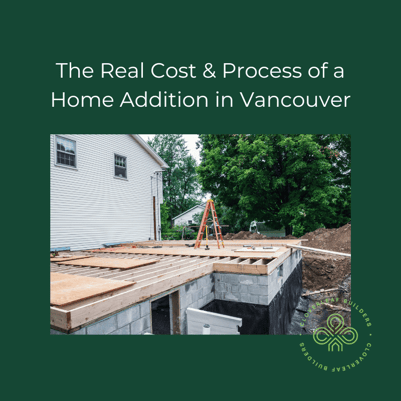 You love your street. You love your neighbours. Your kids are settled in the local school, and you know the best spot to get coffee. The only problem? Your house is bursting at the seams. Whether it’s a growing family, a new remote work-from-home reality, or a desire for a modern, open-concept living space, the walls are closing in.
This is the classic Vancouver dilemma: do you brave the market and move, or do you renovate?
Moving in Vancouver is a costly and disruptive venture, involving realtor commissions, land transfer taxes, and the emotional toll of uprooting your life. This is why a home addition—adding new, functional square footage to your existing property—is such a compelling option. It allows you to create a custom space, perfectly tailored to your family's needs, without giving up the home and community you love.
However, an addition is not a simple project. It’s a major construction undertaking that is significantly more complex than an interior renovation. As a builder with over 30 years of experience, our team has guided countless homeowners through this journey. It requires meticulous planning, a deep understanding of municipal bylaws, and a realistic, transparent budget.
This guide will walk you through the entire process, from the first critical question to the final coat of paint.
Before you spend a single moment on Pinterest dreaming of great rooms, there is a fundamental question that must be answered: What are you legally allowed to build?
In Vancouver, your dreams are governed by your Floor Space Ratio (FSR).
As we discussed in our Garage Cost Guide, FSR is a planning control that limits the total buildable floor area on your lot. It's the ratio of a building's total floor area to the size of the lot it's on.
Why FSR is Everything: If your home is already "built out" to its maximum allowable FSR, you cannot add any new floor space. Period. Many older Vancouver homes were built before current FSR limits and are already "over-built," making an addition impossible without seeking a complex variance or (more likely) forgoing the project.
Beyond FSR, we must also investigate:
Determining this is the non-negotiable first step. It requires a professional to pull your property's file at the City and analyze your existing plans against current bylaws.
Once we know your "building envelope" (the 3D space you're allowed to build in), we can explore what kind of addition makes sense.
Sometimes, you can’t build out (due to lot coverage limits) and you can’t build up (due to height restrictions). Or, perhaps you simply want to maximize the potential of the footprint you already have.
This is where the House Lift or Basement Dig-Out comes into play. This strategy is incredibly popular in Vancouver, particularly for converting damp, low-ceilinged basements into high-value legal rental suites or spacious family zones.
There are two primary ways to achieve this:
This involves structurally disconnecting your home from its foundation, lifting it 2 to 4 feet (or more) into the air using hydraulic jacks, and pouring a brand-new concrete foundation beneath it.
Best For: Homes with crumbling foundations, severe water issues, or extremely low basement ceilings (under 6 feet). It allows for full-height ceilings (8-9 ft) and large windows, making the basement feel like a main floor.
The Perk: You get a brand new, waterproof, seismically upgraded foundation and the ability to install modern weeping tile and drainage systems.
If you can’t raise the house (due to height bylaws), you go down. Underpinning involves excavating the earth beneath your existing foundation in sections and pouring new concrete "legs" to extend the foundation downwards.
Best For: When you only need an extra foot or two of height and want to preserve the exterior look of the home or avoid the massive logistics of a lift.
The Perk: It preserves the existing landscaping and upper floor structure with slightly less disruption to the exterior, though it is labour-intensive.
Lifting a house is a six-figure investment, but it adds massive value, often creating a space that can generate significant rental income.
Includes: Engineering, permits, excavation, the physical lifting of the house, pouring the new foundation and slab, waterproofing/drainage, and lowering the house back down.
Does Not Include: Any interior framing, plumbing, electrical, or finishing of the new basement space. This is just for the "shell."
Once the house is set on the new foundation, the interior work is similar to a new build. For a 1,000 sq. ft. basement, finishing it into a legal 2-bedroom suite (framing, insulation, drywall, kitchen, bath, flooring) will typically add another $150,000 - $250,000 to the budget.
Total Project Estimate: For a complete project—lifting an older home and creating a turnkey, high-end legal suite—Vancouver homeowners should budget between $300,000 and $450,000+ depending on finishes and site conditions.
This is the number one question, and the answer is complex. Adding square footage is one of the most expensive types of construction.
Why is an addition so expensive? The cost per square foot for an addition is almost always higher than the cost per square foot of a brand new build. This is because we are not just building a new box; we are performing "surgery" on your existing home.
This cost includes:
As a general guideline, a professionally managed, fully-permitted home addition in Vancouver in 2026 will typically cost between $400 and $800+ per square foot.
Here are some project examples to make those numbers more concrete:
As you can see from the ranges, an "estimate" without a plan is just a guess. The only way to arrive at a real, accurate number is through a meticulous planning and design phase. This is the Cloverleaf Pre-Construction Process.
This service provides you with a comprehensive plan, a detailed scope, and a fixed-price budget before a single hammer is swung.
This investment in planning is the single most important factor in a successful, on-budget, and on-time addition.
Once the pre-construction is complete and the contract is signed, we move into the build phase.
Before we can break ground, we must submit our full set of engineered drawings to the city for approval. Be prepared: this is a long wait. In Vancouver, receiving a building permit for a complex addition can take up to 6 months. This timeline is out of our hands and is simply a reality of building in this city.
An addition requires a full orchestra of skilled professionals. We manage and schedule all of them, including:
We do everything in our power to minimize disruption, but an addition is inherently disruptive.
For a ground-level rear addition, we can often work for months from the outside, building the new foundation and shell before we "breach" the existing house. This is typically a 1-2 week period of intense disruption, after which we are working inside the new space.
For a second-story addition, you must plan to move out. Your home will be without a roof and exposed to the elements for a period. It is not safe or practical to live on-site.
It’s at this point we would hand deliver our neighbour letter prior to construction, informing them of the project timeline and providing advance notice of any major material deliveries that may temporarily impact street parking or access.
---
A home addition is a major life event. It’s a significant financial investment and a test of patience. But when it’s complete, it is truly transformative. It's the solution that allows you to keep the community you love while creating the space your family needs, all while adding significant, tangible value to your greatest asset.
The key to success is meticulous pre-planning and partnering with a team that has the experience to manage the immense complexity of these projects, from the first FSR calculation to the final turnover of the keys.
Ready to explore the possibilities for your Vancouver home? Contact Cloverleaf Builders today to discuss your project and learn more about our comprehensive pre-construction process.
Insights and inspiration for Better Living Spaces